The Zero-Click Crisis: What Healthcare Providers Need to Know
Organic CTR dropped 61%. Zero-click searches hit 83% for AI Overview queries. But conversion rates climbed 60%. Here's why the data tells a more nuanced story—and the 9 strategies that separate winners from losers.
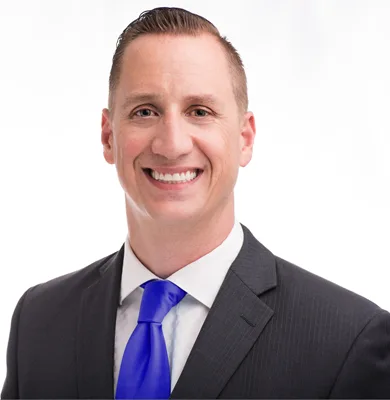
Chad Kubik
February 27, 2026
Last Updated: May 2026
1. The Data: How Bad Is It Really?
The numbers are stark. Similarweb data shows zero-click searches increased from 56% to 69% between May 2024 and May 2025. Gartner predicts that by the end of 2026, traffic from typical searches will drop by 25%.
The impact on click-through rates is even more dramatic. Seer Interactive's September 2025 study reveals devastating CTR declines for queries with AI Overviews:
-61%
Organic CTR Drop
From 1.76% to 0.61%
-68%
Paid CTR Drop
From 19.7% to 6.34%
Ahrefs confirmed in February 2026 that AI Overviews reduce clicks by 58% on average. Searches triggering AI Overviews now show an average zero-click rate of 83%, compared to 60% for queries without AI Overviews.
No Recovery in Sight
Seer Interactive found no signs of CTR recovery and recommends planning for an additional 20-30% further CTR decline in 2026. The trend is acceleration, not stabilization. The entire search click ecosystem is compressing, and even queries without AI Overviews are delivering fewer clicks than 12 months ago.
2. Why Healthcare Is Especially Vulnerable
Healthcare is one of the most affected verticals because health queries are overwhelmingly informational—exactly the type AI Overviews are designed to answer. According to BrightEdge data, AI Overview presence in healthcare has grown from 45-67% across query types in 2023 to 90-100% in December 2025.
The Healthcare Zero-Click Cascade
Informational niches like health and how-to content often see 40-70% traffic drops as AI-generated answers prove "good enough" for most searchers. The cascade works like this:
- Patient searches "how long does Invisalign take"
- AI Overview provides comprehensive answer (typical treatment time, factors that affect duration, etc.)
- Patient gets their answer—no click needed
- Your detailed blog post on the same topic gets zero traffic despite ranking #1
- Your content did the work of training the AI, but you got none of the benefit
According to eHealthcare Solutions, AI health search is already reshaping traffic patterns across the healthcare publishing industry. Some health publishers have reported traffic declines of 40%+ since AI Overviews expanded.
The YMYL Factor
Healthcare content falls under Google's YMYL (Your Money or Your Life) classification, which means Google applies heightened quality standards. While this creates a higher barrier to entry, it also means practices that invest in demonstrable E-E-A-T (Experience, Expertise, Authoritativeness, Trustworthiness) have an advantage—AI systems preferentially cite sources with strong YMYL trust signals.
3. The Silver Lining: Quality Over Quantity
Before panic sets in, consider this counterintuitive finding: some healthcare clients experienced a 40% drop in traffic alongside a 60% increase in conversion rates. According to upGrowth's analysis, the focus is shifting from quantity to quality engagement.
Why? AI Overviews are filtering out casual browsers. The patients who do click through to your website have already consumed the basic information from the AI Overview. They're clicking because they want to take the next step—book an appointment, learn about your specific practice, or evaluate you as a provider.
-40%
Website Traffic
Fewer total visitors
+60%
Conversion Rate
Higher quality visitors
This means your website traffic reports may look alarming, but the quality of that traffic is actually improving. The patients reaching your site are warmer, more informed, and closer to a booking decision. This has real implications for how you measure success—more on that in section 7.
4. Be Cited, Not Just Ranked
In the zero-click era, the most valuable real estate isn't position #1 in organic results—it's being cited as a source within the AI Overview itself. The data backs this up:
The Citation Advantage
- • Brands cited in AI Overviews earn 35% more organic clicks than non-cited brands
- • Cited brands also earn 91% more paid clicks
- • Citation effectively acts as an AI endorsement, building trust before the click
For clinical queries where AI Overviews are unavoidable (90-100% of results), the strategy isn't to compete against the AI Overview—it's to be cited inside it. Here's how:
Demonstrate E-E-A-T
Showcase real practitioner credentials, clinical experience, and professional affiliations. Include author bios with verifiable qualifications on every piece of content.
Structure Content for AI Extraction
Use clear headings, direct answer paragraphs, and structured data. AI systems prefer content that's well-organized and easy to parse.
Provide Unique Insights
AI can't cite what doesn't exist. Original research, proprietary data, clinical case studies, and expert opinions give AI systems a reason to cite you specifically.
Build Authority Through Backlinks
Citations from medical journals, professional organizations, and healthcare publications signal authority to both Google and AI systems.
5. Local SEO: The Zero-Click Exception
The single most important data point for dental and orthodontic practices: only 7.9% of local searches trigger an AI Overview. For healthcare provider searches specifically, the number drops to 0%.
Google tested AI Overviews on local healthcare queries like "dentist near me" and "orthodontist in [city]"—and then deliberately removed them. This decision, documented by BrightEdge, means local search remains the primary patient acquisition channel where traditional SEO still works at full effectiveness.
The Local SEO Opportunity
While competitors panic about AI Overviews, smart practices are doubling down on local SEO—the channel that still delivers full click-through value.
- • "Dentist near me" searches have grown 200%+ in five years
- • Local map listings capture 67% of clicks
- • 87% of consumers use Google to evaluate local businesses
- • Google Business Profile often converts better than websites
This creates a clear strategic priority: for every dollar you might have spent chasing informational rankings that now lead to zero-click results, consider redirecting a portion toward local SEO where those dollars generate real patient appointments.
6. 9 Strategies to Adapt
Based on the latest research from Silvr Agency, PracticeBeat, and Healthcare Success, here are 9 strategies for healthcare practices in the zero-click era:
Dominate Local Search
Optimize your Google Business Profile, build 120+ reviews, upload 20+ photos, and maintain perfect NAP consistency. This is your highest-ROI investment in 2026.
Optimize for AI Citation
Structure content with clear headings, direct answers in the first paragraph, and comprehensive FAQ sections. AI systems extract and cite well-organized content.
Implement Comprehensive Schema Markup
Add LocalBusiness, MedicalBusiness, Person (doctor), FAQ, Article, and Speakable schema to your pages. Structured data is the language AI systems speak.
Build E-E-A-T Authority
Publish content with verifiable author credentials. Include doctor bios, professional affiliations, and clinical experience. Link to professional profiles. YMYL content demands demonstrated expertise.
Target Bottom-of-Funnel Keywords
Shift keyword strategy toward high-intent queries ("Invisalign cost in [city]", "emergency dentist open now") that lead to action rather than informational queries that AI answers directly.
Optimize Website for Conversion
With fewer but higher-quality visitors, every click matters more. Streamline booking flows, add prominent CTAs, implement online scheduling, and ensure mobile excellence.
Diversify Traffic Sources
Don't depend solely on Google. Build presence across ChatGPT, Perplexity, social media, email marketing, and community partnerships. Allow AI crawlers in your robots.txt.
Create Ungated, Original Content
AI systems can only cite content they can access. Remove paywalls and login requirements from educational content. Original research, case studies, and proprietary data give AI reasons to cite you.
Implement llms.txt
Create a structured content map at your site root for AI crawlers. While adoption is still early, it positions your site for better AI integration as the standard matures.
7. New Metrics for the Zero-Click Era
According to Healthcare Success, healthcare marketing analytics just got harder—but there's still plenty you can track. The marketers thriving in 2026 stopped optimizing for rankings and traffic. They optimize for trust, citation, and share of voice.
Old Metrics vs. New Metrics
Old: Total Website Traffic
Declining industry-wide due to zero-click. No longer a reliable success indicator.
New: Conversion Rate & Quality
Fewer visitors but higher conversion = better ROI per visitor.
Old: Keyword Rankings
Position #1 means less when AI Overviews sit above it.
New: AI Citation Visibility
Track whether your content is cited in AI Overviews and LLM responses.
Old: Impressions & CTR
CTR is declining across the board—it's a macro trend, not your failure.
New: Brand Mentions & Share of Voice
Track how often your practice is mentioned across AI platforms.
| Old Metric | Why It's Declining | New Metric | Why It Matters |
|---|---|---|---|
| Total website traffic | Zero-click reduces clicks industry-wide | Conversion rate & quality | Fewer but higher-intent visitors |
| Keyword rankings | Position #1 below AI Overview | AI citation visibility | Being cited = 35% more clicks |
| Impressions & CTR | Macro trend, not your failure | Brand mentions & share of voice | Visibility across AI platforms |
| Page views | Content consumed in SERPs | Patient acquisition cost | Direct business impact |
The Bottom Line
Don't panic about declining traffic numbers. Instead, ask: Are we acquiring more or fewer patients? That's the metric that pays the bills. If patient acquisition is steady or growing despite lower traffic, your marketing is working—you're just measuring the wrong things.
Key Takeaways
- Zero-click searches hit 83% for AI Overview queries, with organic CTR dropping 61% and no recovery in sight
- Healthcare is especially vulnerable because health queries are overwhelmingly informational—exactly what AI Overviews answer
- The silver lining: conversion rates are up 60% as AI filters out casual browsers, leaving more qualified visitors
- Local SEO is the exception—only 7.9% of local searches trigger AI Overviews, making it your highest-ROI channel
- Be cited, not just ranked—brands cited in AI Overviews earn 35% more organic clicks and 91% more paid clicks
- Measure what matters—shift from traffic volume to patient acquisition cost, conversion rate, and AI citation visibility
Chad Kubik
Chad Kubik is Director of Sales and Marketing at Rooster Grin Media and a dental industry marketing strategist with 20 years of experience. He spent 15 years as a regional consultant at Patterson Dental and has worked with hundreds of dental and orthodontic practices across the country.
Connect on LinkedInWant help applying this to your practice?
I work with dental and orthodontic practices to build and execute digital marketing strategies. If you want a second opinion on your current approach — or a plan from scratch — a 30-minute call is a good place to start.
Book a Free Strategy Call